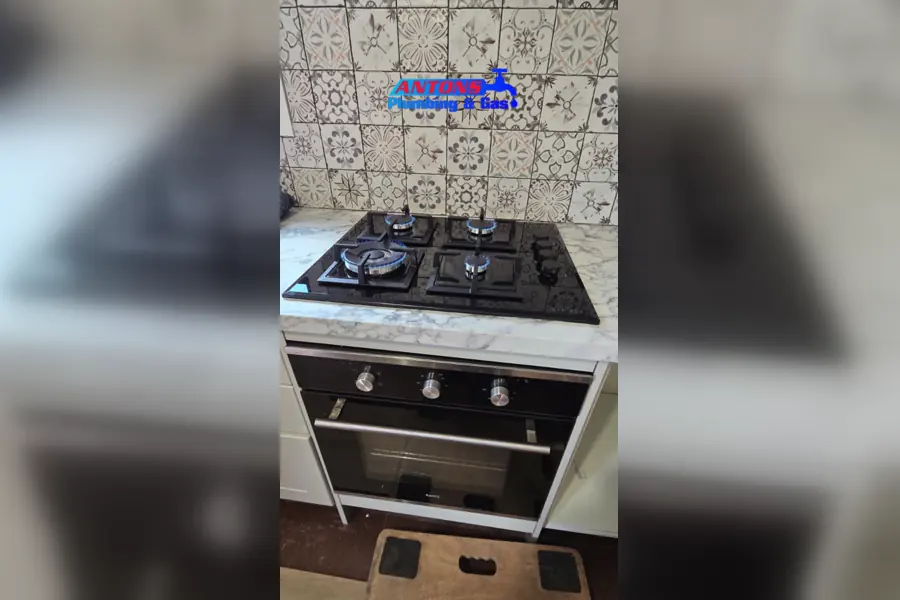
A cooktop can fit the hole in the benchtop without being ready to connect. Before we discuss installation, we need to understand the appliance, gas supply and the space around it. Matching the advertised width is only one part of planning the job.
If you are comparing appliances, contact our Hills District gas fitting team with the model information before committing to a purchase. We can discuss what needs assessing and which parts of the kitchen work require separate arrangements. Here is what makes that conversation useful.
Send Us the Model, Not Just the Width
Send us the model specifications and installation instructions for the cooktop you are considering. We need the requirements for that particular appliance, not just a retailer’s description. Explain the existing arrangement as well, including whether the cooktop is staying in the same position.
The NSW Government guide to using a gasfitter explains that gas repair and renovation work must be completed by a licensed gasfitter. It also advises checking the gas supply type before buying an appliance.
Ask about the practical details:
- Is the proposed appliance suitable for the property’s gas type?
- What installation information does the gasfitter need?
- Can the existing connection arrangement be assessed?
- Are changes to cabinets or the benchtop involved?
- Will another trade be needed for associated work?
- What access is required around and below the appliance?
Do not disconnect the old cooktop or alter its connection to help prepare for the visit.
A Photo Helps, but It Is Not an Installation Assessment
Photos can help us understand the current layout and plan a visit. They cannot confirm everything about the installation. Keep the brand, model and specifications with those photos so we can discuss the proposed appliance alongside the existing setup.
Tell the team whether this is a replacement in the same position, a new connection or part of a kitchen renovation. Relocating the cooktop may involve a different scope from changing an appliance within an existing installation.
Customers in Castle Hill should mention apartment or strata access where relevant. For Baulkham Hills properties, parking, cabinet access and any previous kitchen alterations are also useful booking details. Coverage and attendance are confirmed after the address and job information are reviewed.
What Does “Install the Cooktop” Actually Include?
Before work proceeds, ask the gasfitter to explain the proposed connection work, any alterations identified during assessment and what checking will be completed. The agreed scope should make clear which parts of the job are included.
Useful questions include:
- Does the work include disconnection of the existing appliance?
- Who arranges removal of the old cooktop?
- Are additional fittings or pipe alterations expected?
- What happens if the installation differs from the supplied photos?
- Which associated tasks need separate arrangements?
- How will the completed work and documentation be handed over?
A clear scope reduces uncertainty when comparing proposals. The lowest starting figure is not necessarily a comparison of the same work, particularly when access or alterations have not yet been assessed.
Who Is Handling the Rest of the Kitchen?
A kitchen project can combine plumbing, gas, electrical work, cabinetry and surface alterations. Confirm who is responsible for each part before booking several trades into the same space.
If a sink or dishwasher connection also needs attention, describe it when discussing household plumbing repairs. This helps the team understand the overall job without assuming every kitchen task is included in the gas-fitting scope.
For a gas hot-water appliance rather than a cooktop, see our hot water repairs and replacement guide. The household demand, appliance location and installation considerations differ, so the booking information should reflect the actual system.
Keep the Completion Documents with the Appliance
Use the Service NSW tradesperson licence check to review the contractor’s details and relevant work categories. Ask who will carry out the gas work if several trades are attending.
NSW Government guidance explains that completed gas work requires the appropriate compliance or inspection certificate, depending on the gas supply. Ask the gasfitter which document applies and retain it with the appliance instructions and other job records.
Treat a Suspected Gas Leak as an Emergency
This article concerns planned installation. If you smell gas inside a property, leave immediately and call 000 from a safe location, following the NSW Government guidance linked above. Avoid flames and operating electrical switches in the affected area. Do not attempt to find or repair a leak yourself.
Talk to Us Before Setting the Installation Date
Contact The Hills District Plumber or call 0493 824 176 with your address, appliance details and preferred timing. We will discuss the planned work, access and availability so you can arrange the appropriate assessment and installation scope.
Questions to settle before approving the work
For a gas smell in the property, NSW Government advises leaving immediately and calling 000 for the NSW Fire Service from a safe location. Do not delay that response for a normal booking. Once the immediate situation is addressed, clarify the licensed inspection scope, any network restrictions and what must happen before the appliance can be used again.
Read the NSW Government gas safety guidance for the official guidance.
Frequently asked questions
Should I call a plumber first if I smell gas inside?
NSW Government advises leaving immediately and calling 000 for the NSW Fire Service from a safe location. A routine booking must not delay this.
Can I use a phone inside to report the smell?
Move to a safe location first. Avoid operating electrical devices or switches in the suspected gas-affected area.
Is it safe once the smell disappears?
Do not assume so. Follow emergency or network instructions and have the relevant installation assessed before restarting it.
Can I find a gas leak with a flame?
Never use a flame to look for a leak. Leave investigation and testing to appropriately licensed professionals after the immediate danger is addressed.
Does a new cooktop fit any existing cut-out?
No. Check the exact dimensions, clearances, gas type and installation requirements before buying or modifying the benchtop.
Can an LPG cooktop connect directly to natural gas?
Do not assume compatibility. The appliance and any approved conversion requirements must be checked by the licensed installer.
Should the old gas connection be reused?
Only after its suitability and condition are assessed. A similar appliance size does not establish that the existing connection is appropriate.
What should a gas installation quote explain?
Ask about removal, connection work, any required changes, testing and documentation. Cabinetry or electrical work may be separate.
What information helps a non-emergency gas booking?
Provide the appliance model, gas type if known, location, symptoms and access details. Do not operate a suspect appliance to gather more information.
Who can reconnect an appliance after a suspected leak?
Use an appropriately licensed gas fitter and follow any emergency or network restrictions. Do not reconnect or relight it yourself.