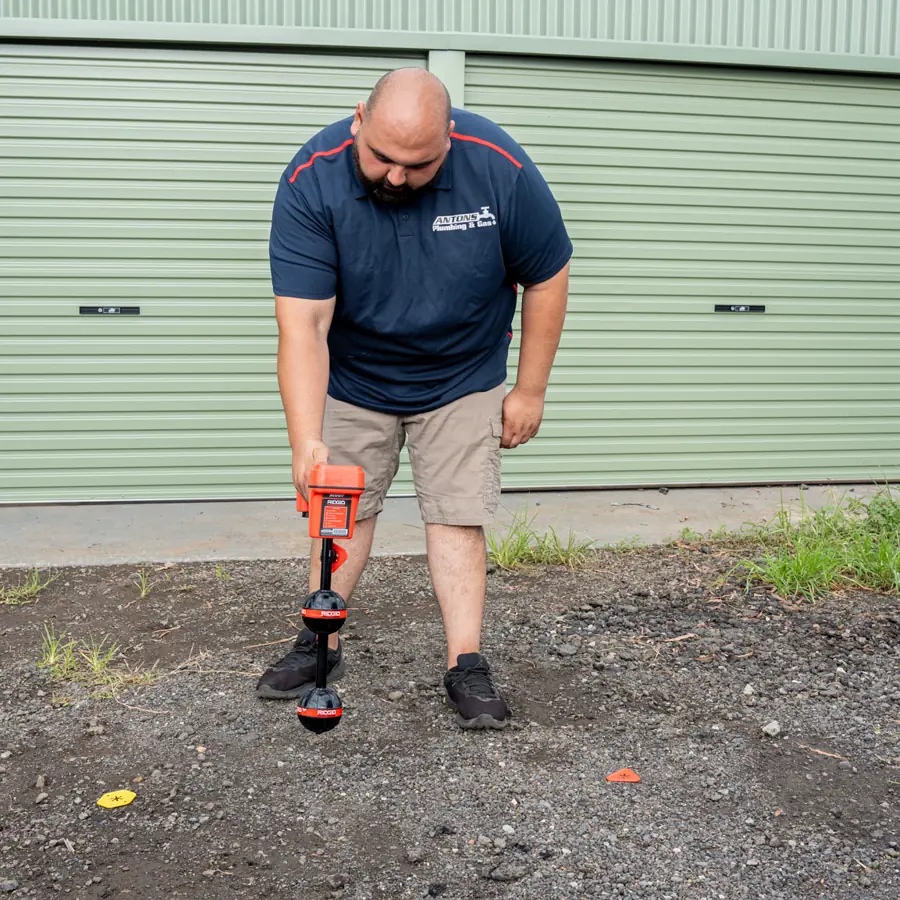
A damp patch tells us where you can see moisture. It does not tell us exactly where the problem starts. That is the distinction we want to establish before discussing opening a wall, lifting paving or approving a concealed-pipe repair. Investigation and repair are separate decisions, even when you want the problem resolved quickly.
When you contact our Hills District leak detection team, start with what you can see and when it happens. We use those observations to plan the next assessment, rather than treating a higher bill or wet surface as a confirmed diagnosis.
Can You See the Leak, or Only Its Effects?
If you can clearly see a tap dripping or water escaping from an accessible connection, describe that first. A targeted plumbing repair may be the appropriate starting point.
Leak detection is more relevant when the source is uncertain. Examples include water use that remains unexplained, persistent dampness or a running-water sound without an obvious fixture fault. These observations justify investigation, but they do not establish a diagnosis.
Tell the team if water is spreading quickly or approaching electrical equipment. Keep clear of electrical hazards and explain the urgency when calling. Where there is immediate danger, prioritise emergency assistance rather than a routine booking.
Tell Us What Changes After Rain or Water Use
Please do not expose pipework to prepare for our visit. We would rather start with your observations than an opening made on a guess. Disturbing a surface before narrowing the source can add disruption without answering the original question.
Prepare the following information:
- Where dampness appears and whether it changes over time.
- Whether symptoms follow rainfall or normal water use.
- Any recent increase in water consumption.
- Which fixtures or appliances have been running.
- Previous plumbing repairs, building work or inspection reports.
- Photos of visible changes taken from a safe position.
Sydney Water’s leak detection guidance includes a meter-based check for unexplained water use. Follow its instructions and account for water-using appliances; a moving meter alone does not identify the precise fault.
For shared meters, rentals or strata properties, explain the arrangement before interpreting readings or arranging access.
What We Can Establish Before Discussing Access
We start with the symptoms, accessible plumbing and available isolation points. Depending on the installation, pressure checks, isolation testing or moisture investigation may help narrow the next step. The useful question is what each check establishes, not simply which equipment is available.
Ask what the proposed visit covers. It should distinguish investigation from the repair itself and explain any access limits. A concealed line may require additional work before a repair can be scoped, even after the likely area has been narrowed.
For homes in North Kellyville, mention recent construction, plans or builder information that may help explain the pipe routes. For Winston Hills properties, previous alterations and the location of accessible valves are useful details to share.
What Does the Detection Visit Include?
A clear conversation helps you understand what you are authorising and what a successful investigation can reasonably establish.
Ask the plumber:
- Which observations suggest a plumbing leak?
- What testing is included in the initial scope?
- Will any surfaces need to be disturbed?
- What evidence will be explained after testing?
- Is repair included, or quoted after investigation?
- Who handles reinstatement if access work is needed?
No method should be presented as a universal guarantee that every concealed leak can be pinpointed without disruption. The approach depends on the installation, access and evidence gathered during the visit.
You can independently review contractor details through the Service NSW licence check before approving the work.
Finding a Leak and Making Good Are Different Jobs
Once the source is better understood, ask the plumber to explain the repair options and any remaining uncertainty. Replacing accessible fittings is a different scope from reaching pipework beneath a surface.
If cabinets, walls, paving or landscaping require access, clarify who will arrange the necessary work and subsequent reinstatement. Keep records of findings and authorised work for your own reference. For strata or insurance matters, ask the relevant organisation what information it needs; an investigation does not guarantee approval or reimbursement.
If the dampness is near a hot-water unit, our hot water repair or replacement guide explains the separate questions worth discussing about that system.
Bring Us the Clues, Not a Guessed Diagnosis
Check our local service areas and prepare your address, symptoms and access details. Explain whether the issue is ongoing or rapidly worsening so the team can discuss the appropriate next step.
Contact our plumbing team or call 0493 824 176 to arrange a leak assessment, subject to availability. Starting with a defined investigation gives you a better basis for approving repairs and managing disruption at your property.
Questions to settle before approving the work
A meter observation is a starting point, not a pipe location. Account for automatic water uses and record the test conditions before discussing leak detection. Ask the plumber what evidence supports the next test and what remains uncertain. This helps avoid opening a wall or digging a lawn based solely on a changed meter reading.
Frequently asked questions
Does a moving meter pinpoint a hidden leak?
No. It indicates water movement, which may be legitimate use or leakage. Check automatic uses before treating it as evidence of a fault.
Can dampness come from something other than plumbing?
Yes. Rain entry, drainage, condensation and waterproofing faults can create similar marks. Timing and location help direct the investigation.
Should I open a wall where the damp patch appears?
Wait for assessment. Water can travel away from its source, and opening finishes at the wettest point may miss the fault.
What should I record before a leak assessment?
Record when the area becomes wet, recent weather, water use and any meter observations. Safe photographs of changes can help.
Can leak detection guarantee no digging or opening?
No. Testing may narrow the search, but pipe access and confirmation can still require targeted opening. Ask what each test can establish.
What if the leak is close to electrical equipment?
Keep people clear and seek urgent help. Do not touch wet switches, appliances or electrical components to investigate the plumbing.
Will fixing the pipe also repair the damaged finishes?
Usually these are separate scopes. Clarify who handles drying, cabinetry, flooring or wall repairs after the source is addressed.
Can an intermittent leak be missed during a visit?
It can be harder to reproduce. Explain the usual timing and conditions; do not deliberately cause more damage to demonstrate it.
Does a higher bill prove a pipe has burst?
No. Changes in consumption and billing can also affect cost. Compare actual usage and observations before deciding what to test.
Will insurance pay for the investigation?
Cover depends on the policy and circumstances. Contact the insurer and keep records; a plumbing diagnosis is not a coverage decision.