Leak detection
Underground Water Leak in the Hills: What Determines How Much We Need to Dig?
How much we need to dig for an underground water leak depends on the fault location, pipe depth and condition, nearby services and safe working access. Finding the likely leak first can narrow the work, but a small wet patch does not guarantee a small excavation.
Key takeaways
- Water can travel through soil before it appears at the surface.
- Leak detection and repair access are separate parts of the job.
- Other buried services must be considered before excavation.
- Ask what the quote includes for testing, repair and surface reinstatement.
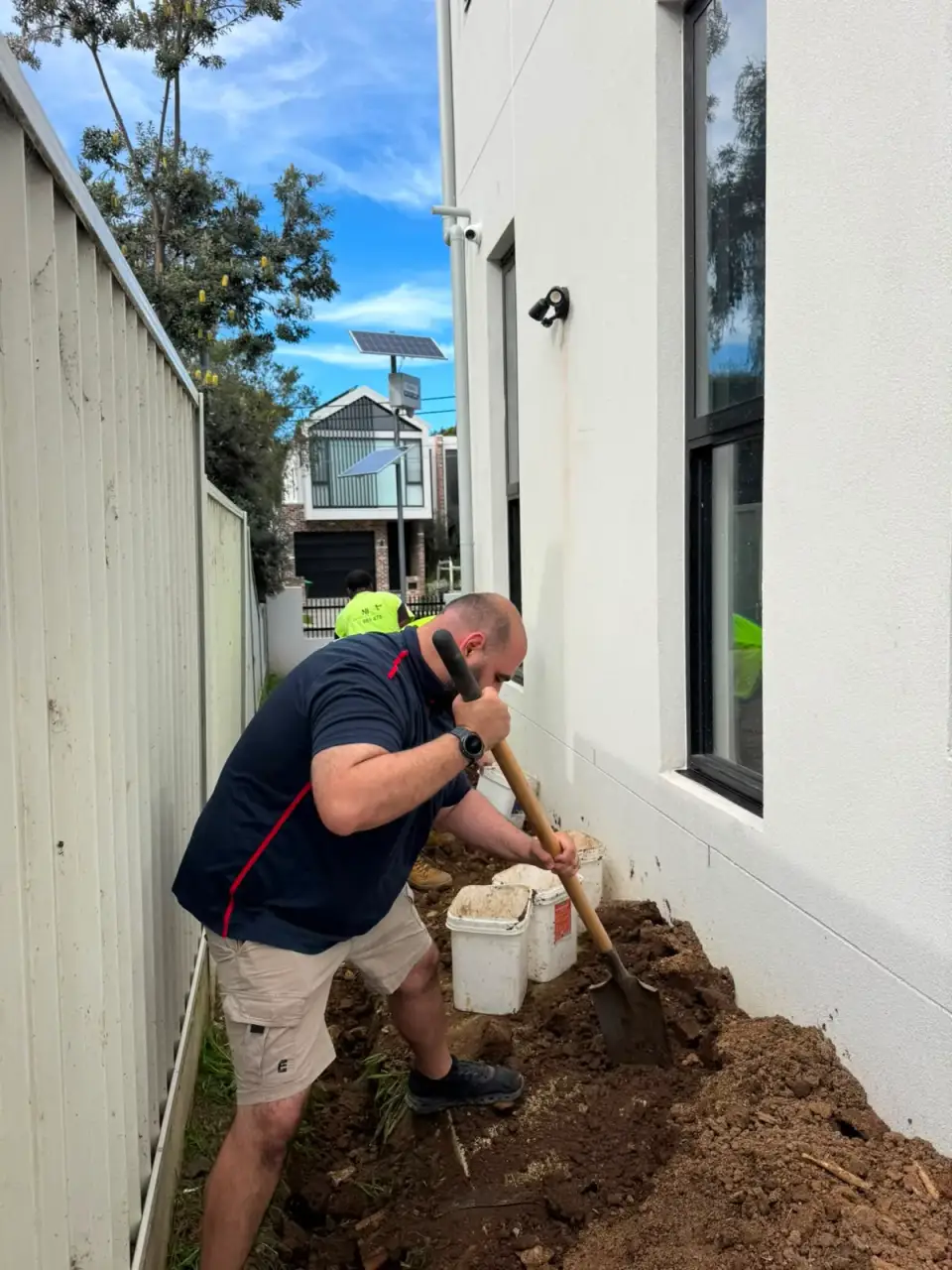
Find the pipe fault before choosing the hole
The greenest patch of lawn or wettest edge of paving is a clue. It may not sit directly above the leak. Water can follow a trench, a slope or a path beneath the surface, so opening the ground at the first visible puddle can miss the source.
Start with underground water leak detection in the Hills District. Describe unexplained meter movement, changes in water pressure and when the wet area appeared. Testing helps distinguish a supply leak from irrigation or water collecting after rain. The appropriate method depends on the pipe and available access.
Why a pinpoint location still needs working room
Knowing where a fault is likely to be does not establish the complete excavation dimensions. The plumber needs room to expose sound pipe, make the repair and check it. The opening also has to suit the depth, ground conditions and the way the work can be carried out safely.
Pipe condition can change the scope
A single damaged connection may allow a local repair. A badly deteriorated section may need a longer replacement. Ask which finding would justify extending the work and how you will approve that change. Nobody should promise an exact trench length from a photograph of a wet lawn.
What lies above and beside the pipe?
A pipe under loose garden soil presents different access questions from one beneath concrete, steps or a driveway. Tell us about recent landscaping and any drawings you hold. Surface finishes, tree roots and access for equipment all affect the repair plan and reinstatement.
SafeWork NSW’s excavation guidance says underground essential service information must be obtained before excavation and provided to those doing the work. Do not start a trial hole yourself because the suspected leak seems shallow.
Separate the repair from making good
When comparing quotes, check these items individually:
- Investigation and locating the likely leak.
- Opening the ground or removing a surface finish.
- Repairing the affected supply pipe and checking the result.
- Backfilling and restoring lawn, paving or concrete.
Reinstatement can be a fair part of the job. Ask whether pavers will be lifted and reused, whether matching materials are available and who handles any specialist finish. A plumbing repair price should not be read as a promise that every surface will look exactly as it did before.
Prepare useful information without disturbing the site
Take photos from safe, firm ground and show fixed landmarks such as a path or house corner. Note whether the wet area changes when irrigation runs. Keep people and vehicles off soft ground, and let us know if water is moving towards the building.
If the leak is active, ask for advice about safely isolating your supply. Do not operate an unidentified valve on a shared service. In a strata property, alert the manager so responsibility and access can be checked alongside the urgent repair needs.
Before work starts, agree how any unexpected pipe damage will be documented. A photo of the exposed fault and an explanation of the revised scope can make the decision much clearer than an open-ended request to keep digging.
Quick check
Does a small wet patch mean a small repair?
No. Ask what has been located, what remains uncertain underground and what would trigger extra excavation. Confirm how any scope change will be approved.
Frequently asked questions
Can leak detection avoid all digging?
It may narrow the search, but repairing a buried supply pipe can still require excavation. Detection alone does not fix the damaged pipe.
Will a moving meter locate the leak?
No. It can indicate unexplained water use after normal uses are accounted for, but it does not identify the buried fault position.
Can water appear metres away from the leak?
Water can travel through the ground. The surface wet area should be considered alongside testing rather than used as the sole digging point.
Can you promise a small hole before attending?
No reliable excavation size can be promised without assessing the pipe location, access and ground conditions.
Does a pipe under concrete always need full driveway removal?
Not automatically. The affected position and repair method need assessment before deciding which part of the surface must be opened.
Who restores the paving?
Check the written scope. Plumbing repair, backfill and specialist paving reinstatement may be separate items.
What happens if more damaged pipe is found?
Ask for the finding to be explained and the extra scope priced or authorised before non-urgent additional work proceeds.
Should I turn off irrigation before the visit?
Tell the plumber how it is supplied and controlled. Avoid changing shared or unfamiliar controls; follow advice for your setup.
Can an old pipe be repaired instead of replaced?
Sometimes a local repair is suitable, but the exposed condition and ability to join sound pipe determine the recommendation.
What should I send when booking?
Send safe photos, the timing of the wet patch, any meter observations and details of paving, shared supplies or recent ground works.
Conclusion
The excavation size follows the evidence and safe repair requirements. Locate the likely fault, agree the repair scope and check what restoring the surface includes.
We’re The Hills District Plumber, operated by Antons Plumbing & Gas. Our water leak detection in the Hills District can help you plan the next step. Tell us where the water appears and what covers the ground. We can discuss investigation and the next step towards repairing the leak.